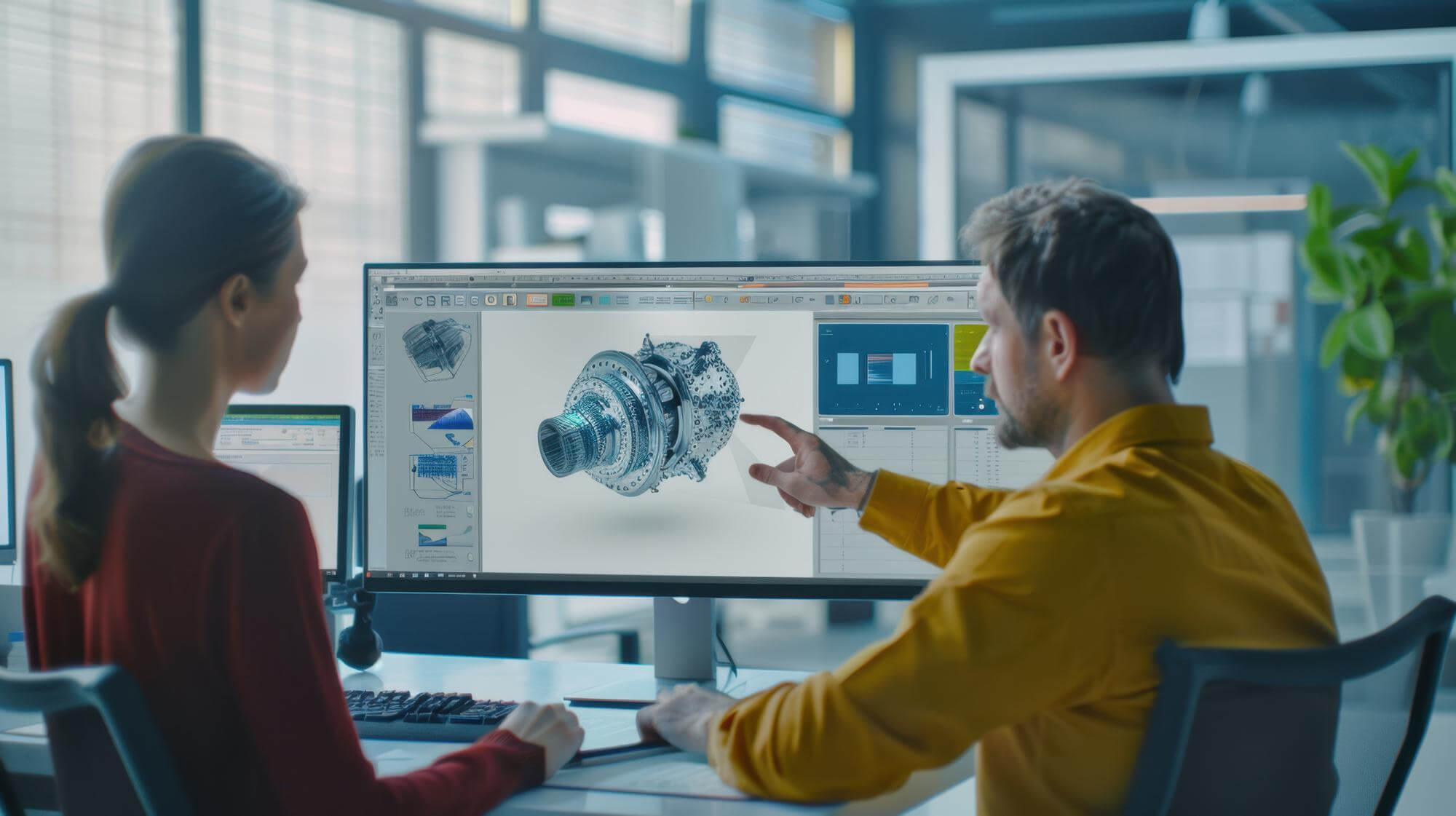
In the contemporary competitive product development environment, there is no longer an option of precision, efficiency and reliability, and they are obligatory. The engineers and designers will provide high-performance products at a minimal cost and minimal risk and in a shorter time. This is where the Finite Element Analysis (FEA) simulation comes into play as a game-changer.
FEA simulation enables the engineer to perform a digital test on the functioning of a product in the real world before the actual construction. Since the beginning, with the automotive parts up to consumer electronics and industrial machines, FEA has established itself as an ingredient in the design of contemporary products. This paper will discuss the importance of FEA simulation and the way it will improve each phase of the design cycle.
Understanding FEA Simulation in Modern Design
Finite Element Analysis (FEA) is a computerised tool that is used to forecast the response of a product to physical forces like stress, heat, vibration, and fluid flow. Engineers can analyse the performance with high accuracy by decomposing the complex geometries into small, manageable bits.
Rather than working with physical prototypes only, designers are able to model various real-life scenarios using computers. This includes:
- Structural deformation and stress.
- Heat transfer and thermal distribution.
- Fatigue performance and lifecycle performance.
- Interactions between fluids and pressure effects.
This digital-first strategy enhances the levels of design confidence to a great extent, before the commencement of manufacturing. The more complex the product, the more essential FEA would be in making sure that all its parts work as they should.
Reducing Design Errors and Development Costs
The best explanation why FEA simulation should be used is that it has the capacity of detecting defects in the design at an early stage of development. The conventional model of product design is usually based on several physical models, which are both time-consuming and costly.
Under FEA, engineers will be able to:
- Identify weak points in structures.
- Efficient material utilisation.
- Avoid overengineering or underdesign.
- Test different design alternatives within a short time.
Early detection of problems helps the company save on expensive redesign and the incurred loss of production. This not only saves money, but it also saves time to market.
As an example, a product failing under stress when it is subject to physical test may need to be redesigned and retooled. Under FEA, these failures are foreseeable and can be rectified at the virtual design stage, thereby minimising the financial risk to a big extent.
Enhancing Product Performance and Reliability
FEA simulation is not merely a validation, but rather it assists in the enhancement of the product performance. Engineers are able to perfect the designs to attain the best strength, durability and efficiency.
The main advantages are:
- Increased structural integrity.
- Improved thermal regulation.
- Increased strength in repeated loads.
- Optimized weight to strength ratio.
In the case of such industries as aerospace, automotive and medical equipment, even slight improvements can impact it tremendously. As an example, losing weight and getting strong can make cars more fuel-efficient or make handheld devices more useful.
The predictive maintenance can also be used with FEA, as it would simulate the behaviour of products over time. This aids in coming up with components that are durable and need minimal repairs, which makes the customers more satisfied.
Accelerating Innovation and Design Iterations
Innovation is promoted when designers are allowed to innovate without any form of restriction. Using FEA simulation allows rapid prototyping of a product in a virtual environment, where the engineers can test many ideas without having to produce physical models.
The advantages of increased iteration are:
- Rapid assessment of design options.
- More creativity in problem-solving.
- Less reliance on physical testing.
- Reduced product development time.
Engineers are able to test the prototype and analyse the results in hours or even minutes, as opposed to waiting weeks to test the prototype. This flexibility is important in the business sector, where agility is a key to outdoing competitors based on speed and innovation.
In addition, FEA is also compatible with CAD software, allowing a smooth flow between design and analysis. The integration makes the changes of design to be tested at once, thus an iterative and responsive development process.
Supporting Sustainability and Material Optimisation
Responsibility in the design of products is emerging as an important area of interest, and FEA is an important component in attaining environmental solutions. With optimisation of materials and minimisation of waste, businesses are able to develop more sustainable products without loss of performance.
FEA is also a factor in sustainability because:
- Optimising the usage of materials.
- Eliminating physical prototypes.
- Reducing the use of energy in manufacturing.
- Increasing the life of the product.
Engineers are able to study various materials and designs to find the most efficient design. This not only lowers the impact on the environment but also lowers the cost of production.
As an example, lightweighting concepts made possible through FEA can substantially lower the use of materials and still retain structural integrity. It is especially crucial in those industries that strive to comply with the stringent environmental standards and sustainability objectives.
Conclusion: FEA as a Strategic Advantage in Product Design
FEA simulation is not a mere technical improvement anymore, but a driving force of more intelligent, faster, and more sure product design. It helps the engineers to minimise risks, maximise performance and introduce new products to the market more confidently and cost-effectively. With the ever-increasing demands in industries to be more accurate and require reduced development times, it is no longer a choice to incorporate FEA into the design process but a must.
In order to utilise these benefits to the maximum, collaborating with professional experts can make a great difference. SeaShore Solutions is an advanced FEA simulation and engineering support firm whose services are used in assisting businesses to streamline product development, reduce costs, and to obtain high-quality design results. They bring technical know-how to the forefront alongside cutting-edge tools, enabling businesses to turn complicated design problems into high-performing and reliable solutions.