☰

Modern engineering workflows often depend on accurate digital models and seamless data compatibility across platforms. Our Migration and Reverse Engineering services help organizations transform legacy engineering data and physical components into production-ready digital assets through advanced 3D modeling, CAD design, and engineering-driven development processes.
Redesign, maintenance and production often become delayed due to outdated CAD files, scanned drawings and undocumented parts. Inadequate or missing design information may lead to additional modeling, dimensioning, and software compatibility problems, causing delays and errors in the project process.
CAD migration and reverse engineering are used to help recover accurate, usable engineering data for continuing workflows. Creating a CAD model from legacy files, restoring missing part information, checking geometry, and enforcing drawings to up-to-date engineering standards can decrease error rates, streamline future changes and allow a team to carry on a project without redoing anything from scratch.
Speak directly with our engineering team to evaluate your needs, validate feasibility, and plan the right technical approach.
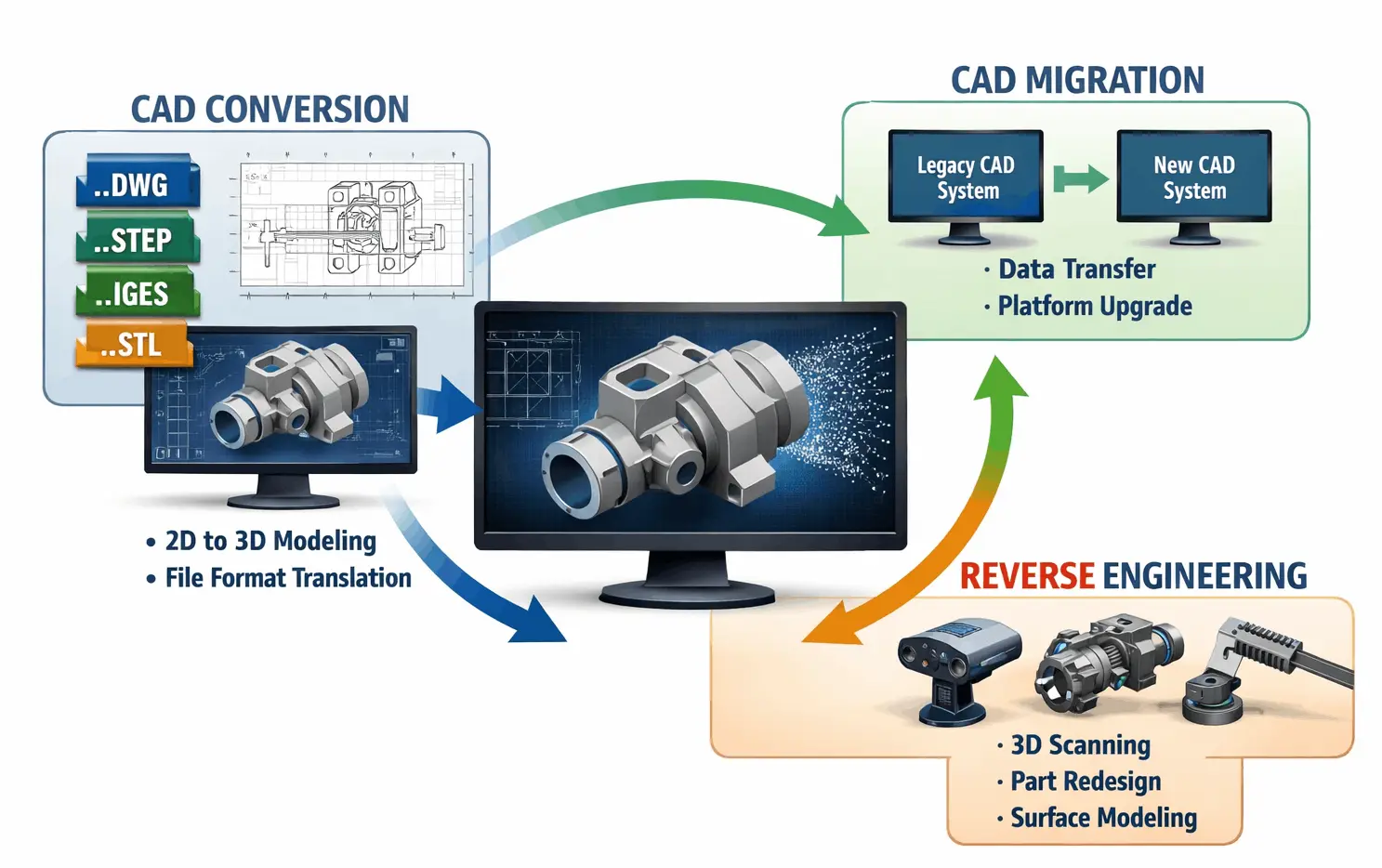
Old paper drawings, scanned PDFs, and outdated 2D files are difficult to modify or reuse in current workflows. We convert them into parametric 3D CAD models that can be used for redesigning, manufacturing, analysis, and future updates without rebuilding the design from scratch.
Moving files between CAD platforms often breaks assemblies, removes features, or changes in geometry. We migrate CAD data between systems such as AutoCAD, SolidWorks, Creo, NX, and CATIA while maintaining assembly relationships, design intent, and model accuracy.
Different suppliers and teams often work on different CAD systems, creating compatibility issues. We convert models into STEP, IGES, Parasolid, and other neutral formats with geometry cleanup and validation, so files can be opened and used across platforms.
When original CAD data is missing, teams are forced to recreate parts manually. We rebuild accurate digital models from physical components using measurement data or scan-based workflows, creating editable CAD models that can be modified and reused.
Point cloud and mesh data are difficult to edit or use directly in engineering workflows. We convert scan data into structured parametric solid and surface models that support future modifications, redesign, and manufacturing requirements.
Equipment upgrades become difficult when existing assets have no updated drawings or models. We recreate accurate digital representations of current systems so retrofit, replacement, and modernization work can move forward with reliable reference data.
Old drawings often lack proper tolerances, standards, or manufacturing details. We recreate and update drawings using current ASME and ISO GD&T standards so they can be used directly for machining, inspection, and production.
Inconsistent layers, naming conventions, and templates create confusion across teams and projects. We standardize CAD files and documentation based on your internal standards, so models and drawings remain organized and easier to manage.
Redesign lag, interoperability and scrap quality are the common effects of legacy CAD files or scanned drawings and undocumented parts. With our services, correct, editable and now production-ready engineering data is reinstated to up-to-date workflows and any subsequent changes.
Outdated engineering data and unsupported CAD files create operational challenges across multiple industries. We help organizations restore structured engineering documentation, accurate CAD models, and manufacturing-ready deliverables for ongoing production and maintenance.
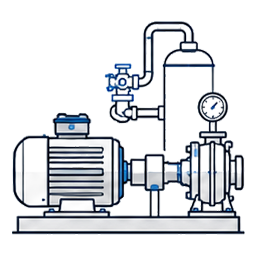
We assist machinery projects in terms of assembly reconstruction, manufacturing documentation, CAD migration, and engineering models which enhance fabrication, maintenance, and equipment upgrades.
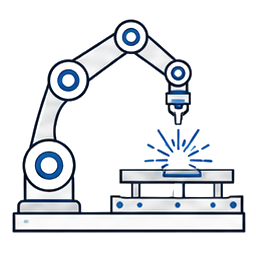
We support automotive work with sheet metal modeling, validating fitments, checking assembly and CAD rebuilding to enhance the accuracy of production and consistency of design.
Our fabrication-ready CAD files, flat patterns, welding drawings and BOMs enhance efficiency on the shop floor and minimize production delays and avoidable rework.
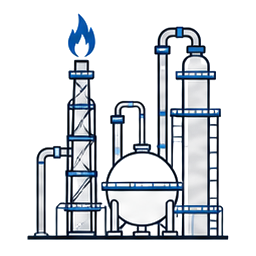
Our services include CAD modelling, technical drafting and installation ready engineering documentation which facilitates plant operations, manufacturing tasks and maintenance needs of the industrial processes.
We facilitate precision engineering projects by using detailed modelling, tolerance checking, assembly checking, and manufacturing-ready products that enhance engineering accuracy and quality control.
We are also helping product development teams in concept modelling, engineering detailing, reverse engineering, and production documentation to expedite the development and manufacturing transition process.
Models given to teams are usually not editable, and thus any slight design modification can be hard. We provide fully editable parametric CAD models to allow your engineers to make updates to the dimensions, changes to the features, and keep developing the model without having to build it again.
Native files are not always opened correctly by the suppliers and vendors with alternative CAD systems. We offer STEP, IGES, and Parasolid files to allow them to share designs in different teams with no compatibility problems or geometry loss.
The causes of delay in production include lack of dimensions in the drawings, lack of tolerances, or revision in the drawings. To create parts that are manufactured correctly, we create manufacturing drawings that hold the information needed to be machined, inspected, and assembled correctly the first time.
Lack of information or inconsistent information about parts in BOMs makes the procurement and assembly teams’ struggle. We manage BOMs using part references, quantities and structure so that we minimize ordering errors and confusion in assembly.
The manufacturing teams take a lot of time in search of specifications, material information, or part information. We design technical datasheets that have well-specified dimensions, materials, and product specifications as reference in speedy production.
The presence of teams without clear references for installation makes assembly and maintenance hard. We also include exploded drawings and assembly documentation indicating part positions, fastener locations, and assembly sequences to facilitate easy installation and service.
Unable to update to appropriate CAD formats and software versions can frequently make legacy engineering data hard to reuse in current workflows. Such problems may result in duplicated modelling work, loss of data, and delays in the process of redesign or manufacturing.
Connect with our engineers to review scope, timelines, and the right execution strategy.