☰

Engineering Heavy Structures for Real-World Conditions
Heavy structures have to do more than look right on a drawing. They need to perform reliably under real operating conditions — high loads, vibration, repeated stress, lifting forces, transportation loads, harsh environments, and installation constraints.
If these conditions are not considered properly during design, issues can show up later as excessive deformation, fatigue cracking, alignment problems, difficult installation, or even structural failure.
At Seashore Solutions, we provide Structural & Heavy Engineering Services to help manufacturers, equipment builders, industrial companies, and engineering teams develop structures that are practical to fabricate, transport, install, and operate.
Our focus is simple: understand how the structure will actually be used, what loads it will face, how it will be fabricated and handled, and what is needed for long-term performance.
We support projects involving:
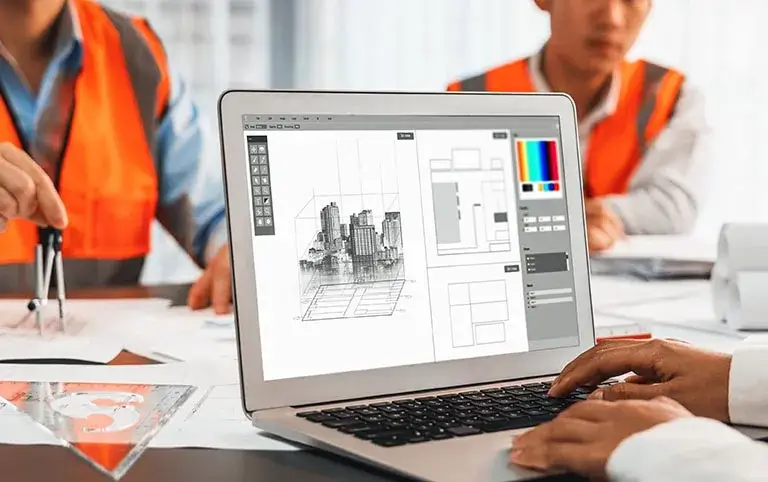
A structure may look strong in a 3D model, but real-world conditions can tell a different story.
Loads can shift. Equipment can vibrate. Structures may be lifted from points that were not part of the normal operating condition. Transportation can introduce temporary forces. Outdoor and offshore environments can add wind, corrosion, and repeated loading.
Structural engineering helps identify these conditions before they become problems during fabrication, installation, or operation.
Speak directly with our engineering team to evaluate your needs, validate feasibility, and plan the right technical approach.
We support projects from early engineering and analysis through fabrication documentation and installation planning.
Large steel structures need to carry significant loads while still being practical to fabricate and install.
We support the engineering of:
Our work considers strength, deformation, structural stability, connections, fatigue behavior, and fabrication requirements.
Very large structures can be difficult to manufacture, move, and install as a single unit.
A modular approach can make fabrication and site installation more manageable.
When developing modular structures, we consider:
The goal is to create a structure that works not only in service, but throughout the entire project lifecycle.
Large fabricated structures can experience significant temporary loads during lifting and transportation.
Incorrect lifting points or load assumptions may cause deformation or unstable handling.
Our engineering support can include:
A strong structure still depends on proper load transfer into the foundation.
We support foundation and anchoring engineering based on structural loads, equipment reactions, base plate conditions, anchor requirements, and installation constraints.
Deliverables can include:
Equipment support systems play an important role in overall machine performance.
Poor support can lead to vibration, misalignment, excessive deflection, or uneven load transfer.
We design mechanical skids and equipment support frames around actual equipment loads, mounting conditions, anchoring requirements, and fabrication needs.
Equipment transported by sea must remain secure while exposed to vessel movement and changing forces.
We support the design of sea fastening systems and installation aids for marine transportation and offshore installation requirements.
Cranes and lifting systems are exposed to high loads as well as repeated operating cycles.
We support structural checks and engineering validation for lifting frames, crane structures, and related equipment where stress, deformation, and fatigue behavior need to be understood.
Marine structures must perform under repeated loading and challenging environmental conditions.
We provide engineering support for structures used in offshore and marine applications, with attention to structural stability, fatigue, durability, and practical fabrication requirements.
Outdoor structures may be exposed to wind, vibration, cyclic loading, and alignment requirements over long periods.
We support structural frames and support systems for renewable energy and other exposed applications where long-term stability is important.
Structural and heavy engineering requirements can vary significantly by industry.
Our services are designed to support projects where strength, durability, fabrication, transportation, and installation all need to work together.
Oil and gas projects often involve large equipment, offshore structures, harsh environments, and complex installation conditions. We support: Topsides, Equipment frames, Offshore structures, Sea fastening systems and Installation engineering
Heavy machinery can create concentrated loads, vibration, and repeated operational forces.
We support machine frames, support structures, fabricated assemblies, and other heavy structural systems used in industrial environments.
Marine structures are exposed to continuous movement, dynamic loads, and demanding environmental conditions.
Our engineering services support marine transportation, shipbuilding, and offshore structural applications.
Renewable energy systems often depend on outdoor structural supports that must remain stable under environmental loads.
We support frames, steel support systems, equipment structures, and related assemblies used in renewable applications.
Manufacturing and process facilities rely on practical, durable support structures for production equipment and plant operations. We support: Mechanical skids, Equipment platforms, Structural frames, Pipe supports, Modular systems and Fabricated steel structures
Large fabricated structures can create challenges during transportation, lifting, and erection.
We support modular structures, heavy assemblies, lifting considerations, and fabrication-ready engineering for infrastructure projects.
Power and energy equipment may operate continuously under demanding load conditions.
We support equipment frames, anchoring systems, support structures, and other heavy fabricated assemblies used in energy applications.
Structural engineering should result in practical information that design, fabrication, procurement, installation, and project teams can actually use.
Depending on the project, our deliverables may include:
We provide editable engineering files with geometry, load conditions, analysis setups, and revision-controlled project data.
Our reports can include:
These reports help support design reviews and technical validation.
We prepare calculation packages covering areas such as:
Clear drawings are critical when a structure moves from engineering into fabrication.
We prepare drawings that can include:
Repeated loading can gradually affect a structure even when individual load events appear acceptable.
Fatigue assessments help evaluate the effects of vibration, cyclic loading, and long-term operation.
We can provide:
These outputs help coordinate the structural design with site and civil requirements.
Strong structural engineering depends on more than software alone.
Good results require the right load assumptions, accurate geometry, proper boundary conditions, practical engineering judgment, and clear documentation.
Our workflows combine structural analysis, FEA, CAD modeling, fabrication detailing, and technical documentation.
We work with platforms such as:
These tools support stress analysis, deformation checks, buckling studies, structural stability, and fatigue-related evaluation.
Our CAD workflows include:
We use these tools for structural assemblies, equipment support systems, fabricated frames, and heavy engineering models.
We use AutoCAD and related detailing tools to prepare:
We support commonly used engineering formats including:
This helps simplify coordination between engineering teams, suppliers, fabricators, and clients.
Connect with our engineers to review scope, timelines, and the right execution strategy.
A CAD model shows the geometry, but it does not automatically show how the structure will behave under real operating loads.
Actual conditions such as vibration, lifting, transportation, uneven load transfer, or repeated stress can affect structural performance.
Structural analysis helps identify these conditions before fabrication or operation.
The loads acting on a structure during lifting or transportation can be very different from the loads it experiences in normal operation.
Incorrect lifting points, rigging arrangements, or transportation supports can introduce additional stress and deformation.
Heavy structures may experience thousands or even millions of load cycles during their service life.
Repeated loading and vibration can gradually lead to fatigue cracks and reduced structural reliability.
Fatigue analysis helps engineering teams understand these long-term effects.
Clear fabrication drawings help the shop understand dimensions, connections, weld requirements, member locations, lifting points, and assembly details.
Better documentation can reduce fabrication mistakes, rework, site mismatches, and installation delays.