☰
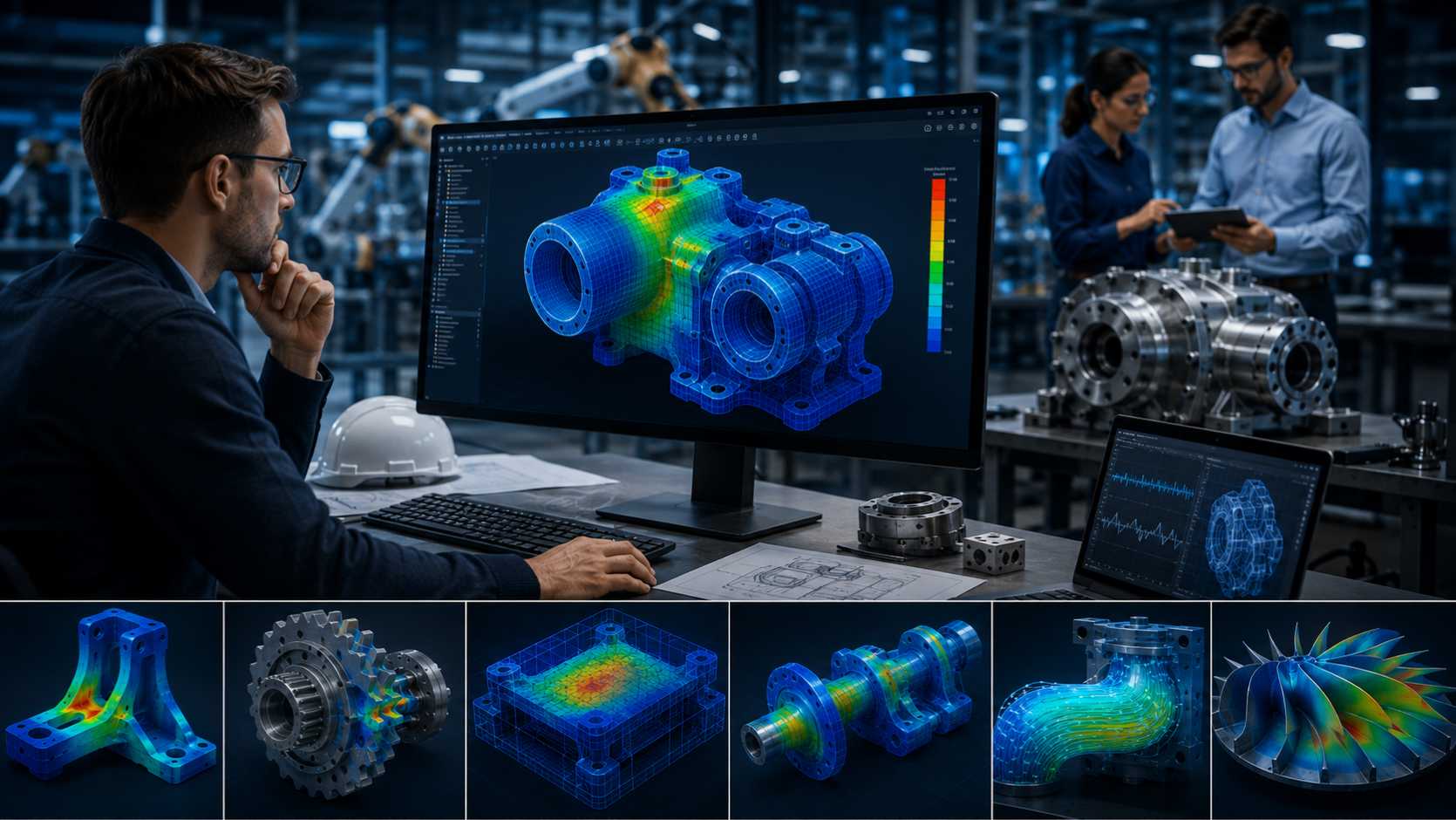
Engineering teams do not usually discover design problems at the best time. Many issues appear during prototype testing, production trials, field installation, or real-world operation. By that stage, even a small structural weakness, vibration issue, thermal problem, or incorrect load assumption can create redesign work, production delays, and unexpected cost.
At Seashore Solutions, we provide FEA analysis services, engineering simulation services, and product design validation support to help manufacturers identify these risks before production begins. Our team uses simulation-driven engineering to evaluate stress, deformation, thermal behavior, fluid flow, motion, and overall product performance so your team can make better design decisions with confidence.
As part of our broader mechanical engineering services, we help companies move from design uncertainty to validated, production-ready engineering.
A design may look correct in CAD but still fail under real operating conditions. Stress concentration, excessive deformation, vibration, thermal expansion, fluid pressure, material behavior, and assembly interaction can all affect product performance.
Simulation-driven engineering helps identify these issues before fabrication and physical testing. Instead of relying only on prototype trial and error, your team can use virtual analysis to understand how a product or machine is likely to perform under real-world loads.
This helps engineering teams:
When simulation is used early, it becomes more than an analysis step. It becomes a practical decision-making tool for better product development.
Speak directly with our engineering team to evaluate your needs, validate feasibility, and plan the right technical approach.
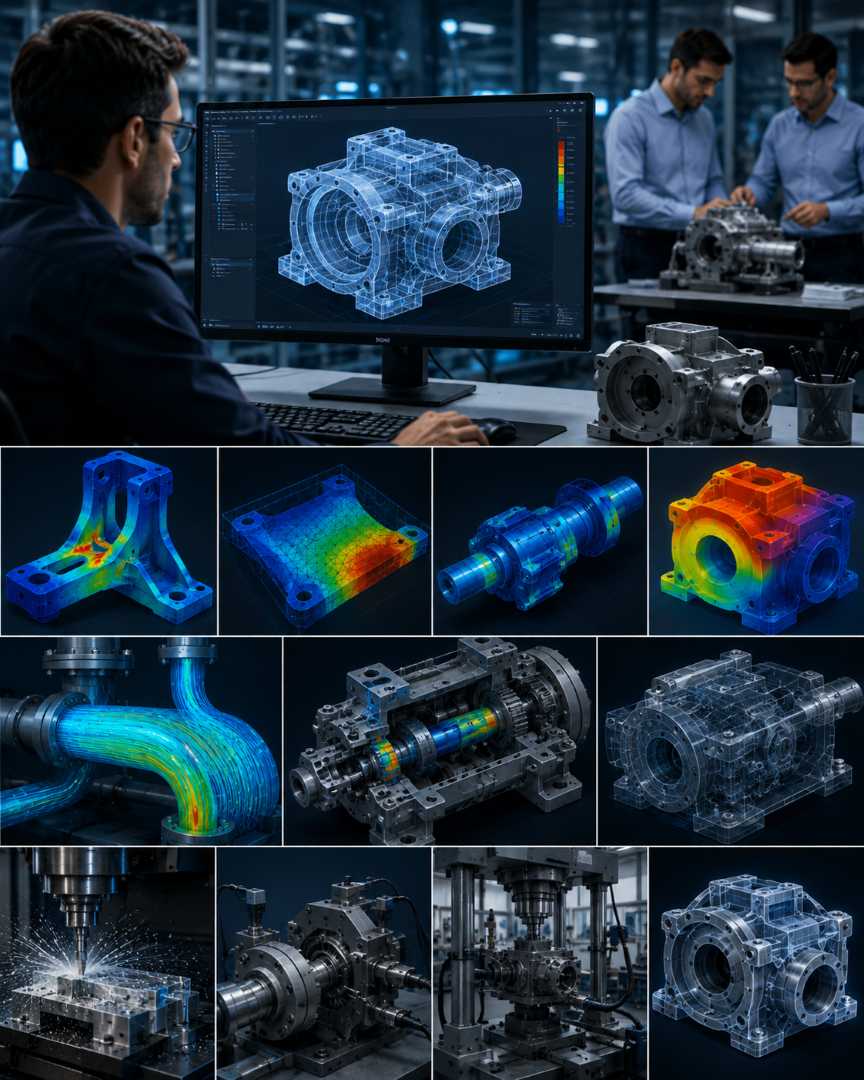
Our advanced simulation and validation services help manufacturers, product development teams, and industrial companies evaluate product behavior before committing to tooling, fabrication, or production.
We support both new product development and improvement of existing designs. When required, our simulation work can also be combined with machine design and development, product and value engineering, and CAD modelling and drafting to create a more complete engineering workflow.
Weak structures, poor load assumptions, and high stress concentration can lead to product failure. Our FEA analysis services help evaluate product strength, stiffness, deformation, fatigue behavior, and structural reliability before manufacturing begins.
We use finite element analysis to study how parts, frames, assemblies, and equipment respond to expected operating loads. This helps engineering teams identify whether a design is too weak, overdesigned, or likely to fail in critical areas.
We support:
FEA is especially useful for machine frames, brackets, welded structures, support systems, pressure-loaded components, heavy equipment, and load-bearing assemblies.
Incorrect loading conditions, unsupported design areas, or weak joints can create failure points in machines and components. Our stress analysis services help identify stress hotspots, high-load zones, joint weakness, and structural risk early in the design cycle.
We analyze:
Stress analysis helps your team understand where a part may bend, crack, deform, or fail. This makes it easier to improve the design before money is spent on prototypes, tooling, or production.
Fluid movement, heat transfer, pressure drop, and thermal flow can directly affect product performance and system efficiency. Our CFD simulation services help evaluate airflow, fluid behavior, pressure conditions, cooling performance, and thermal response across engineering systems.
We support:
CFD simulation is useful for equipment where airflow, liquid flow, cooling, heating, pressure behavior, or internal fluid movement affects product reliability or performance.
Moving assemblies can fail because of interference, unstable motion, vibration, impact loads, or incorrect operating conditions. Our motion simulation services help validate how mechanisms, linkages, automation systems, and mechanical assemblies behave during operation.
We evaluate:
Motion simulation is useful for machines, automation equipment, robotic systems, packaging equipment, lifting mechanisms, and moving industrial assemblies. For automation-focused projects, simulation can also support automation and robotics engineering workflows.
Many product failures do not come from one issue alone. A structure may perform well under static load but fail when heat, vibration, fluid pressure, or motion is added.
Our multi-physics simulation approach helps evaluate combined physical behavior, including structural, thermal, fluid, and motion-related effects. This gives engineering teams a more realistic understanding of how a product or system may perform in actual operating conditions.
A product that is too heavy, too complex, or overdesigned can increase material cost and manufacturing effort. A product that is under-designed can create reliability and safety risks.
Our simulation-driven design optimization helps refine geometry, reduce unnecessary material, improve load paths, and strengthen critical design areas. This supports better product performance while keeping manufacturability and cost in mind.
For projects focused on reducing cost while maintaining function, our simulation work can support product and value engineering decisions.
Simulation is only useful when the results are clear, traceable, and practical for engineering decisions. We provide structured deliverables that support design reviews, technical approvals, production planning, and cross-functional discussions.
We prepare simulation-ready CAD models for structural, thermal, fluid, and motion-based engineering analysis. When required, we simplify geometry, correct assemblies, define contacts, and prepare models for reliable analysis.
We provide clear reports showing stress distribution, deformation, vibration response, thermal behavior, CFD results, and performance-critical areas. These reports help engineering teams understand what is happening in the design and where improvement is needed.
We prepare validation reports that compare simulation outputs with engineering requirements, operating conditions, material behavior, and physical testing expectations. These reports help support technical reviews and production decisions.
We document simulation assumptions, boundary conditions, material definitions, loading conditions, constraints, and engineering decisions. This improves traceability and reduces confusion during review.
We provide neutral simulation data, result summaries, plots, and analysis outputs that can be shared with engineering teams, suppliers, stakeholders, and manufacturing partners.
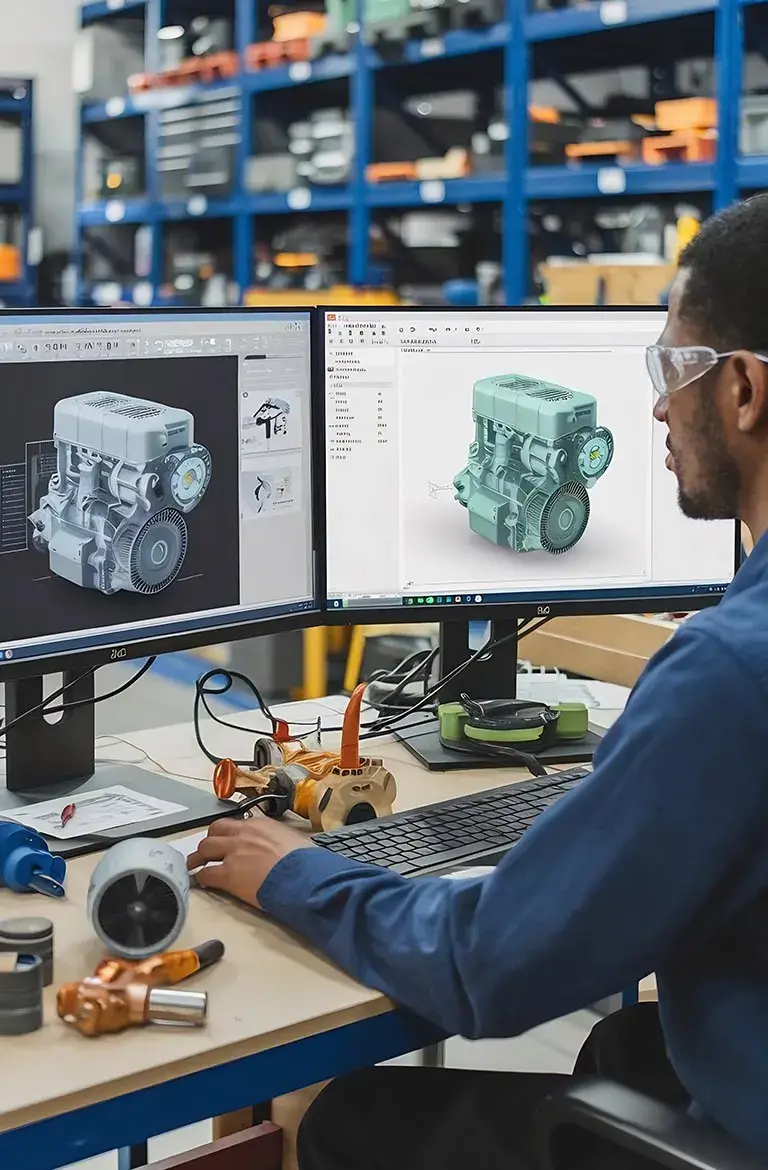
Accurate simulation depends on more than software. It requires proper CAD preparation, realistic material data, controlled meshing, correct boundary conditions, and sound engineering judgment.
Our team supports simulation workflows using industry-standard engineering tools and analysis methods, including:
For teams that need repeatable design workflows, our simulation work can also complement CAD automation and customization projects.
Connect with our engineers to review scope, timelines, and the right execution strategy.