☰
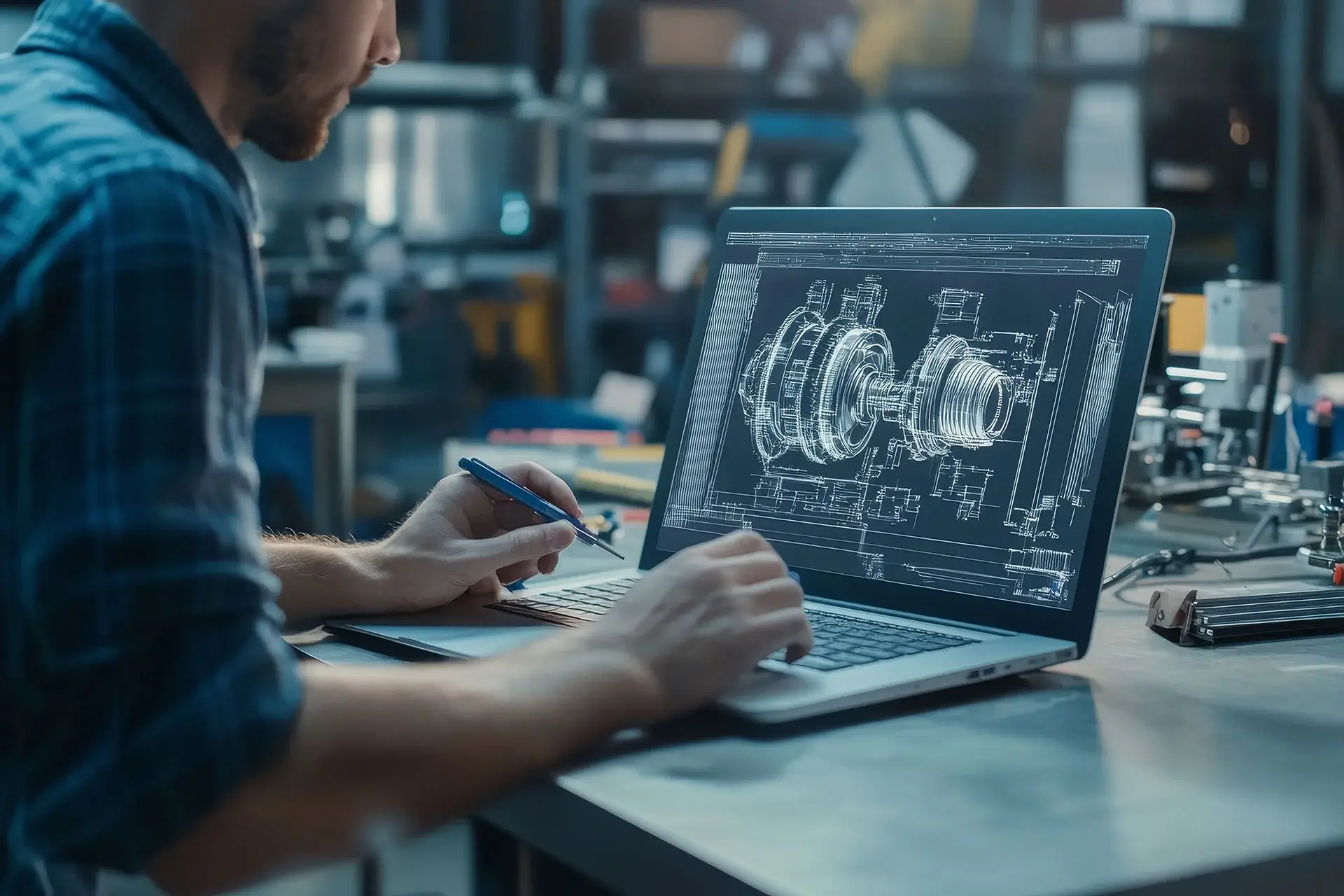
Our Machine Design and Development services turn complex functional requirements into strong, manufacturable, and scalable industrial products that work reliably throughout their service life. By using modern mechanical and engineering principles, we make sure every design meets performance standards, safety guidelines, and production realities.
From the initial idea to the final product, we help you through the engineering design process. We create machines that connect with both upstream and downstream systems, ensuring reliability through design validation and reviews.
Good mechanical design and product engineering are key to safe, efficient, and cost-effective industrial operations. A solid machine design strategy helps organizations:
Speak directly with our engineering team to evaluate your needs, validate feasibility, and plan the right technical approach.
Generate early concepts with feasibility assessments to define machine function, technical viability, and manufacturability through detailed engineering workflows.
Complete mechanical design of components, mechanisms, and entire machines using modern tools in mechanical and CAD engineering.
Create kinematic systems, motion linkages, cams, drives, and dynamic parts for precise and repeatable machine operation with balanced performance and durability.
Design frames, bases, and load-bearing structures that meet strength requirements while lowering material costs through optimization.
Conduct analytical checks, simulations, and physical validations to confirm assumptions, load paths, and safety factors, ensuring reliability under actual operating conditions.
Review and refine designs to make fabrication easier, reduce tooling complexity, and improve production yield.
Optimize part counts, fastening methods, and assembly sequences to cut build time and support efficient assembly.
Assess materials, components, and manufacturing processes to improve cost performance without sacrificing quality or safety.
Engineer material handling equipment, conveyors, and throughput systems that improve plant operations and workflow.
Create designs that meet hygiene standards for food, beverage, and pharmaceutical industries. Focus on cleanability, regulatory compliance, and safe operation.
Offer tailored engineering support to strengthen, modify, or upgrade existing machines for longer life or new operational needs.
Fully parametric 3D CAD models created in your preferred software, preserving design intent for future revisions, variants, or iterative projects.
STEP, IGES, or Parasolid formats for compatibility across platforms, supplier collaboration, and long-term storage without depending on one CAD system.
Detailed 2D engineering and technical drawings suitable for manufacturing, inspection, and quality control.
Organized Bill of Materials that support accurate procurement and effective production planning.
Clear assembly drawings that show part relationships, fastener details, and sequence steps to aid in efficient assembly and installation.
Complete sets of models and documentation compiled for manufacturing handover, project audits, certification reviews, and long-term support.
Connect with our engineers to review scope, timelines, and the right execution strategy.