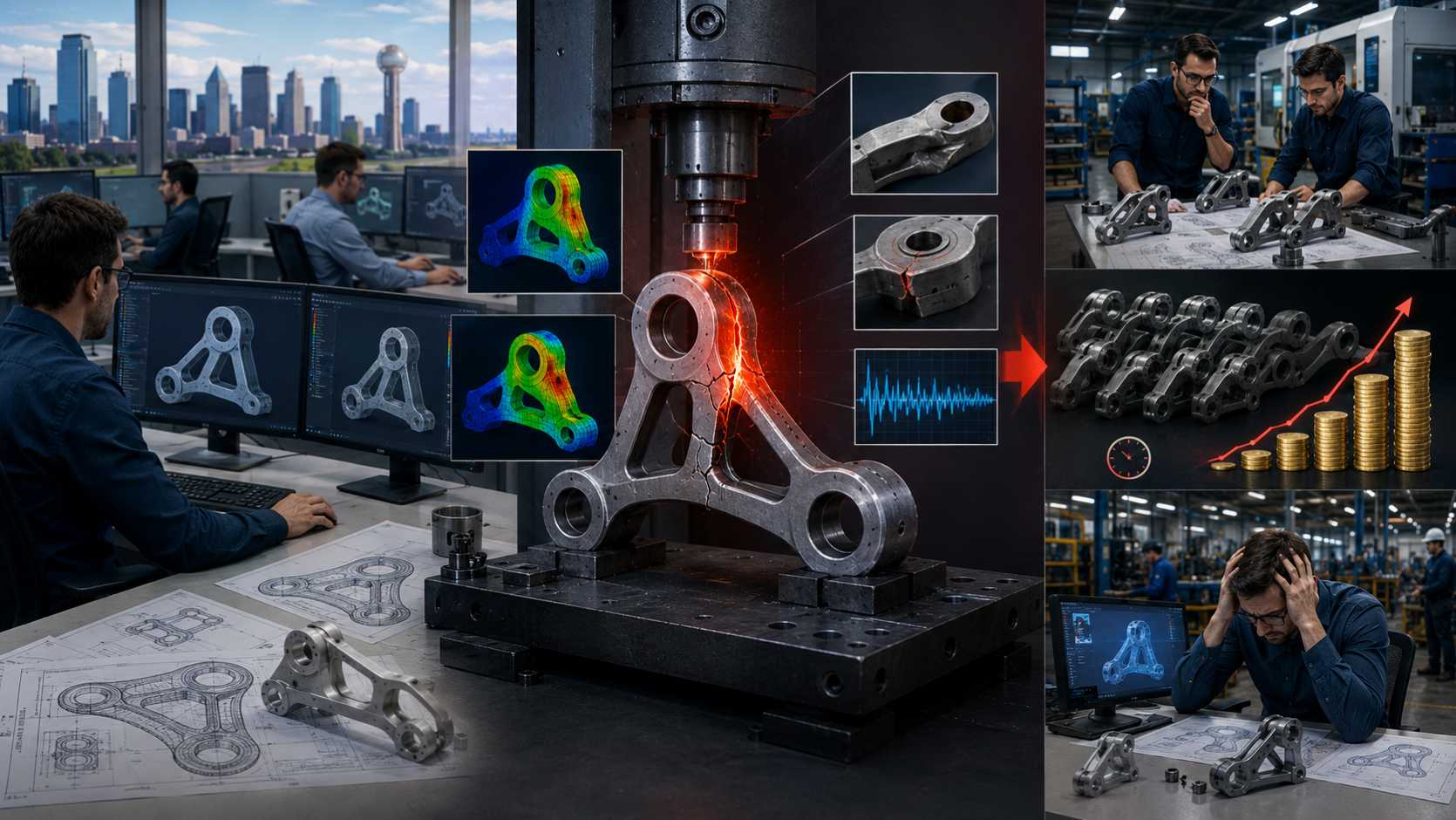
The Most Expensive Engineering Problem Isn’t Failure. It’s Discovering Failure Too Late.
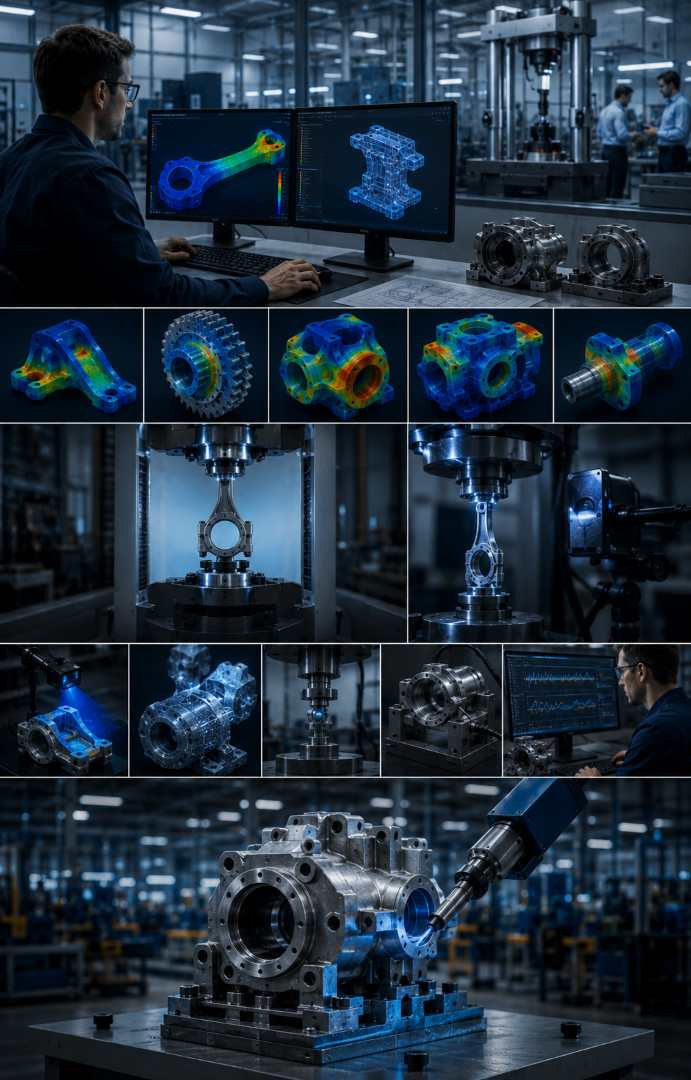
- Imagine spending months designing a new component.
- The CAD models look great.
- The manufacturing team is ready.
- The prototype is built.
- Then testing reveals a critical issue.
- The part deforms under load.
- Stress concentrations appear where nobody expected them.
- Fatigue life is significantly lower than projected.
- Now the project goes backward.
- More prototypes.
- More engineering hours.
- More delays.
- More costs.
This situation plays out every day across manufacturing companies in Texas.
Whether you’re developing oil and gas equipment in Houston, fluid management systems in Austin, process equipment in Corpus Christi, or industrial machinery in Dallas-Fort Worth, the challenge remains the same:
How do you identify problems before they become expensive mistakes?
The answer often lies in understanding when to use Finite Element Analysis (FEA) and when to use physical testing.
At Seashore Mechanical Solutions, we help manufacturers make smarter engineering decisions through simulation-driven product development, engineering validation, and design optimization.
Over the past 15+ years, our engineering team has helped clients reduce development costs, accelerate product launches, improve reliability, and avoid costly redesign cycles by using FEA strategica>lly throughout the product development process.
What Is Finite Element Analysis (FEA)?
Finite Element Analysis (FEA) is a simulation technique that allows engineers to predict how a part or assembly will behave under real-world conditions before manufacturing begins.
Using advanced engineering software and simulation tools, engineers can evaluate:
- Stress
- Strain
- Deflection
- Fatigue
- Thermal behavior
- Vibration
- Pressure loads
- Structural performance
Instead of guessing how a design might perform, engineers can make data-driven decisions early in the development cycle.
This dramatically reduces risk.
The Common Misconception About FEA
One misconception we frequently hear is:
“FEA replaces physical testing.”
It doesn’t.
In reality, successful manufacturers use both.
Think of FEA and physical testing as partners.
FEA helps engineers identify potential issues early.
Physical testing confirms performance in real-world conditions.
The companies that achieve the best results understand how to combine both approaches effectively.
When Should You Use FEA?
FEA is most valuable during design and development.
This is where the greatest opportunity exists to reduce costs and improve outcomes.
Use FEA When Evaluating Multiple Design Concepts
Building five physical prototypes is expensive.
Simulating five concepts is significantly more affordable.
By evaluating multiple options virtually, manufacturers can narrow down the best solution before spending money on tooling and production.
Use FEA to Reduce Prototype Costs
- Every prototype cost money.
- Materials.
- Machining.
- Fabrication.
- Assembly.
- Testing.
- Shipping.
Many projects require multiple iterations because issues are discovered too late.
FEA helps identify weaknesses early and reduces the number of physical prototypes needed.
Use FEA for Product Redesign
Many of our clients come to us looking to reduce costs through product and value engineering rather than create entirely new products.
For example, a welded assembly may contain multiple components that can potentially be redesigned into a single integrated part.
Before making design changes, engineers need confidence that the new design will perform as expected.
FEA allows teams to validate redesign concepts before committing to production.
Use FEA to Improve Reliability
Manufacturers in oil and gas, chemical processing, fluid management, and industrial equipment sectors operate in demanding environments.
Unexpected failures can result in downtime, safety concerns, and significant financial impact.
Simulation helps engineers identify stress concentrations, fatigue concerns, and structural weaknesses before equipment reaches the field.
When Should You Use Physical Testing?
- Despite the power of simulation, physical testing remains critical.
- Real-world environments are complex.
- Materials behave differently.
- Manufacturing variations occur.
- Unexpected conditions arise.
- Physical testing helps validate assumptions and confirm performance.
Use Physical Testing for Final Validation
Before launching a product, manufacturers need confidence.
Physical testing verifies that performance meets design expectations.
Use Physical Testing for Compliance Requirements
Many industries require documented testing for certification, customer approval, or regulatory compliance.
Simulation supports the process, but testing is often required.
Use Physical Testing to Confirm Manufacturing Consistency
A simulation may prove the design works.
Physical testing proves the manufactured product performs consistently.
A Practical Example: Reducing Manufacturing Costs Through Simulation
One of the most effective uses of FEA occurs during product redesign initiatives.
Recently, we worked with a manufacturer seeking to reduce the cost of a fluid management component.
The original design consisted of multiple fabricated and welded parts.
The challenges included:
- High welding labor costs
- Multiple manufacturing operations
- Longer production times
- Increased quality inspection requirements
- Additional installation effort
Rather than immediately producing several redesign prototypes, the engineering team first evaluated alternative concepts through simulation and engineering analysis.
This allowed the client to understand performance implications before investing in manufacturing.
The final redesigned solution reduced part costs by approximately 30% while improving manufacturability and reducing production complexity.
The savings extended beyond manufacturing.
Installation, maintenance, and quality control requirements were also reduced.
This illustrates an important principle:
The best engineering projects don’t focus only on making a part work.
They focus on making the entire product lifecycle more efficient.
Why Texas Manufacturers Are Increasingly Using FEA
Across Texas, manufacturers face several challenges:
Rising Labor Costs Engineering mistakes discovered late in the process create expensive rework.Skilled Labor Shortages Finding experienced welders, machinists, and fabrication specialists continues to be difficult.Faster Product Development Cycles Customers expect shorter lead times and faster innovation.Greater Competitive Pressure Manufacturers need to reduce costs while maintaining quality.
FEA provides a practical way to improve decision-making while reducing risk.
The earlier problems are identified, the less expensive they are to fix.
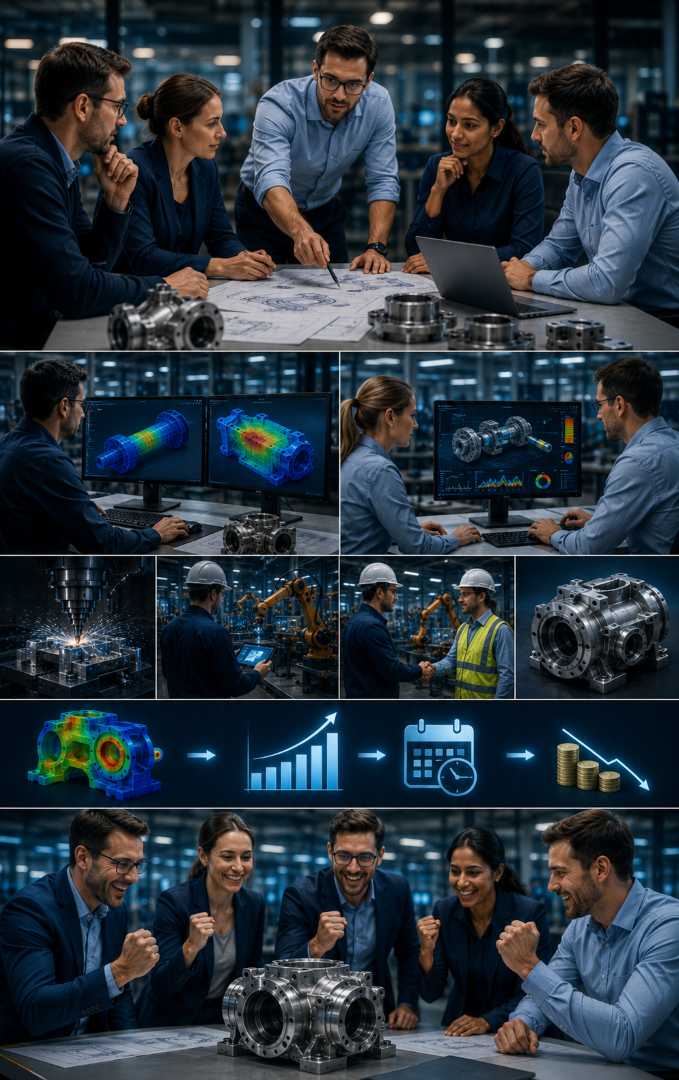
How Seashore Mechanical Solutions Helps Manufacturers Succeed
At Seashore Mechanical Solutions, we believe engineering should create measurable business value.
Our team works closely with product owners, engineering leaders, operations teams, and manufacturing
stakeholders to understand both the technical and commercial objectives of a project.
Our capabilities include:
- Finite Element Analysis (FEA)
- Structural Analysis
- Engineering Validation
- Product Redesign
- Reverse Engineering
- CAD Modeling
- Design for Manufacturing (DFM)
- Design Optimization
- Simulation-Driven Development
- Prototype Support
- Manufacturing Documentation
With more than 15 years of engineering experience, we have helped manufacturers improve product performance, reduce costs, shorten development cycles, and avoid costly production issues.
Our goal is not simply to run simulations.
Our goal is to help clients make better engineering decisions.
The Best Products Are Built Before the First Prototype Exists
The most successful manufacturers understand that engineering validation starts long before a physical prototype reaches the shop floor.
Simulation provides insight.
Testing provides confirmation.
Together, they create a faster, smarter, and more cost-effective path to product success.
If your organization is developing a new product, redesigning an existing component, reducing manufacturing costs, or validating a critical design, FEA can provide valuable answers before expensive mistakes occur.
Looking for FEA Analysis Services in Texas?
Seashore Mechanical Solutions helps manufacturers across Houston, Austin, Dallas-Fort Worth, San Antonio, Midland, Odessa, Corpus Christi, and throughout Texas reduce engineering risk through advanced simulation, product redesign, and engineering validation services.
Whether you need FEA analysis, prototype validation, product redesign, or engineering optimization, our team is ready to help you move from concept to production with confidence.
Contact us today to discuss your next engineering challenge.