
Manufacturers across the United States are under constant pressure to reduce production costs, improve efficiency, and stay competitive without compromising product quality. Rising material prices, labor shortages, supply chain challenges, and tighter customer expectations have made cost control a top priority for manufacturing leaders.
One of the most effective ways to reduce manufacturing costs starts long before production begins. It starts with better product design.
Many production costs are influenced during the design stage, including material usage, tooling complexity, assembly time, labor requirements, sourcing options, and long-term maintenance costs. When a product is designed with manufacturing efficiency in mind, companies can reduce waste, improve quality, and scale production more effectively.
This is why more US manufacturers are focusing on Design for Manufacturability, product cost optimization, lean design, and value engineering as part of their product development process.
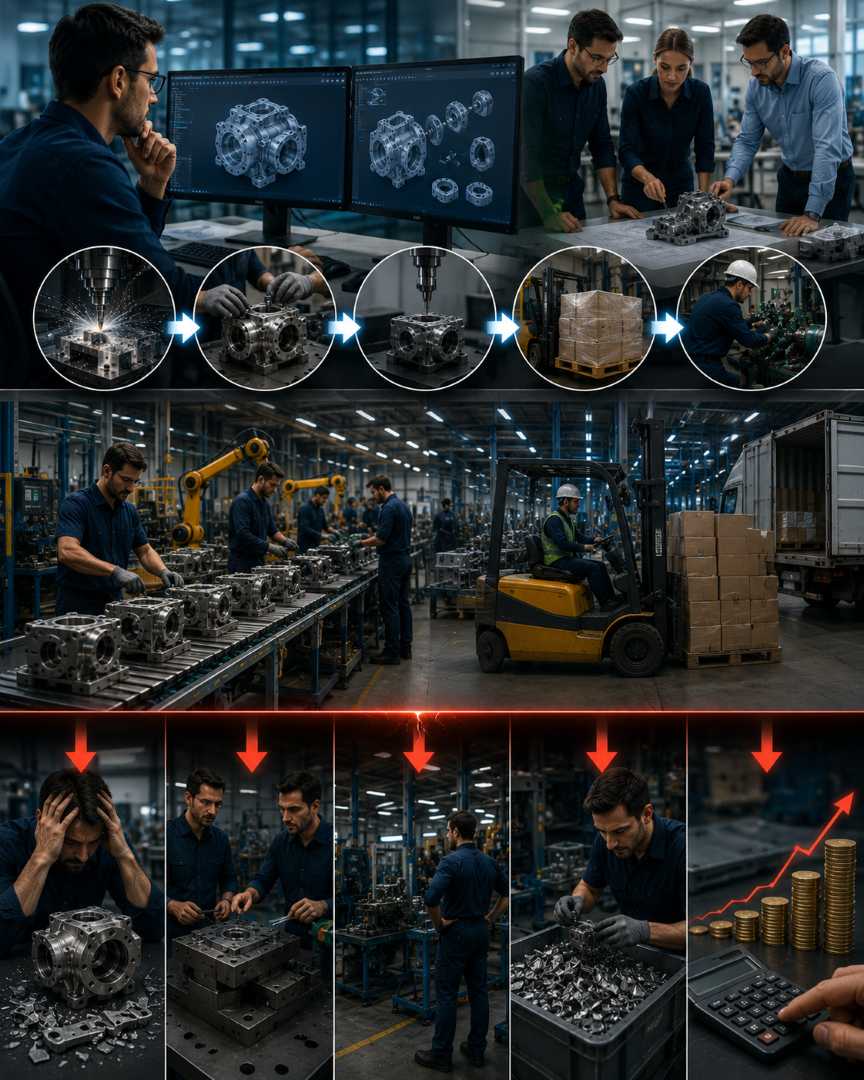
Why Product Design Has a Major Impact on Manufacturing Costs
Product design directly affects how efficiently a product can be manufactured, assembled, inspected, shipped, and maintained.
Once a product moves into production, design changes become more expensive and disruptive. A small design issue that could have been fixed early may later result in tooling changes, production delays, rework, scrap, higher labor costs, or quality problems.
A well-optimized product design can help manufacturers achieve:
- Lower material waste
- Faster production cycles
- Reduced tooling complexity
- Fewer assembly steps
- Lower labor requirements
- Improved product reliability
- Better supplier flexibility
- Lower lifecycle costs
On the other hand, poor design decisions often lead to too many parts, complicated assemblies, excessive machining or fabrication steps, higher defect rates, increased rework and scrap, longer lead times, and higher production costs.
For American manufacturers competing in cost-sensitive markets, these issues can quickly affect margins, delivery timelines, and customer satisfaction.
That is why Design for Manufacturability, commonly known as DFM, is becoming an important strategy for reducing production costs before they reach the factory floor.
Design for Manufacturability: A Smarter Way to Reduce Cost
Design for Manufacturability is the process of designing products so they are easier, faster, and more cost-effective to manufacture.
Instead of treating design and manufacturing as separate stages, DFM connects engineering decisions with real production requirements. The goal is to create products that perform well while also being practical to build at scale.
Simplify Product Geometry
Complex shapes often require additional machining, special tooling, longer setup times, or more inspection effort. By simplifying product geometry, manufacturers can reduce production time and lower the risk of manufacturing errors.
A simpler design does not mean a weaker product. It means the product is engineered to meet performance requirements without unnecessary complexity.
Optimize Material Selection
Material selection has a direct impact on cost, strength, durability, machinability, weight, availability, and supply chain reliability.
Choosing the right material can help reduce procurement costs, improve manufacturability, and support better long-term performance. In many cases, switching to an alternative material can reduce cost without affecting product quality
Reduce Part Count
Every additional part adds cost. It may require sourcing, storage, inspection, assembly, fasteners, documentation, and quality checks.
Reducing part count can help manufacturers lower costs by improving assembly speed, inventory control, product reliability, quality consistency, and maintenance simplicity.
Standardize Components
Using standard, off-the-shelf components can help reduce custom manufacturing costs and shorten lead times.
Standardization also supports better supplier negotiation, easier inventory management, and faster production planning. For manufacturers managing multiple product lines, standardized components can create strong cost advantages over time.
Design for Assembly
Design for Assembly, or DFA, focuses on making products easier and faster to assemble.
A good assembly-friendly design reduces handling time, minimizes alignment issues, avoids unnecessary fasteners, and lowers the chance of human error. This is especially important for manufacturers facing labor shortages or rising labor costs.
Material Efficiency and Smart Engineering Choices
Material cost is one of the largest expenses in manufacturing. Even small improvements in material usage can create meaningful savings at scale.
Use Alternative Materials Where Practical
In some cases, a more cost-effective material can deliver the same required performance. Engineers can evaluate material strength, corrosion resistance, weight, machinability, and availability to identify better options.
Avoid Over-Engineering
Over-engineering is one of the most common hidden cost drivers in product design.
A product should be strong enough and reliable enough for its intended use, but unnecessary thickness, excessive tolerances, oversized components, or overly complex features can increase material and production costs.
Use Simulation and Validation Tools
Modern advanced simulation and validation tools allow engineers to test strength, stress, thermal behavior, fluid flow, and performance before physical production begins.
This helps reduce trial-and-error prototyping, improve design confidence, and identify cost-saving opportunities earlier in the development process.
Reduce Scrap and Waste
Efficient cutting, nesting, forming, machining, and fabrication strategies can reduce scrap and improve material yield.
For manufacturers working with sheet metal, structural components, machined parts, or fabricated assemblies, better material utilization can lead to significant savings over time.
Lean Design Principles for Cost Optimization
Lean manufacturing is widely used to reduce waste in production. The same thinking can be applied during the design stage.
Lean design focuses on creating products that deliver maximum customer value with minimum waste.
Remove Non-Value Features
Every feature should have a clear purpose. If a feature does not improve performance, usability, safety, manufacturability, or customer value, it may be adding unnecessary cost.
Streamline the Production Flow
Products should be designed to move smoothly through the manufacturing process. A design that requires too many setups, special handling, difficult inspection steps, or manual adjustments can create bottlenecks on the production floor.
Reduce Variability
Standard designs, consistent dimensions, and repeatable processes help reduce defects and improve quality.
Enable Faster Production
A streamlined product design can reduce cycle times, simplify assembly, and increase output without major capital investment.
Modular Design and Standardization for Scalable Manufacturing
Modular design is one of the most powerful strategies for reducing manufacturing costs and improving scalability.
What Is Modular Design?
Modular design means creating products using interchangeable parts, assemblies, or modules that can be reused across different product variations.
Benefits of Modular Design
- Economies of scale through common parts and higher production volumes
- Faster product development with standardized modules
- Easier assembly, service, repair, and upgrades
- Better inventory control with fewer unique parts
- More flexible product options without full redesign
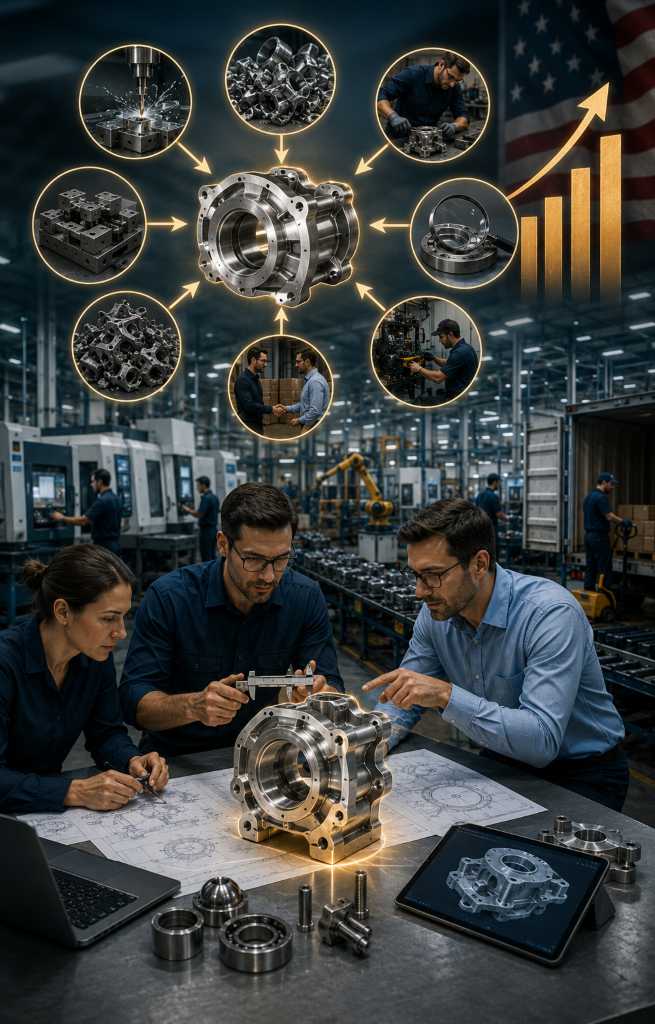
How Better Design Supports Long-Term Cost Reduction
Reducing manufacturing costs is not only about lowering the price of materials or negotiating with suppliers. Those strategies can help, but they do not always solve the root cause of high production costs.
Better product design helps address cost at the source. A well-designed product can reduce material waste, machining time, assembly labor, tooling cost, quality issues, rework, scrap, supplier dependency, maintenance requirements, and production lead time.
For US manufacturers, this can lead to stronger margins, better delivery performance, improved customer satisfaction, and greater competitiveness.
Partner with Seashore Solutions to Design Smarter
Reducing manufacturing costs does not mean cutting corners. It means making smarter engineering decisions from the beginning.
Design for Manufacturability, material optimization, lean design, modular product architecture, and value engineering can help manufacturers lower costs while improving product quality and production efficiency.
At Seashore Solutions, we help manufacturing companies improve product designs, reduce unnecessary complexity, and identify cost-saving opportunities through practical engineering support.
Our team provides product design optimization, CAD modeling and drafting, material optimization, cost reduction engineering, machine design and development, and manufacturing support.
If your internal team needs added capacity for ongoing CAD or engineering work, our remote mechanical engineering support can help you manage design tasks, documentation, and production-ready engineering deliverables.
Ready to Reduce Manufacturing Costs Through Better Design?
Speak with our engineering team to evaluate your product design, identify cost-saving opportunities, and create a practical path toward better manufacturability.
Contact Seashore Solutions today to discuss your design optimization and cost reduction requirements.